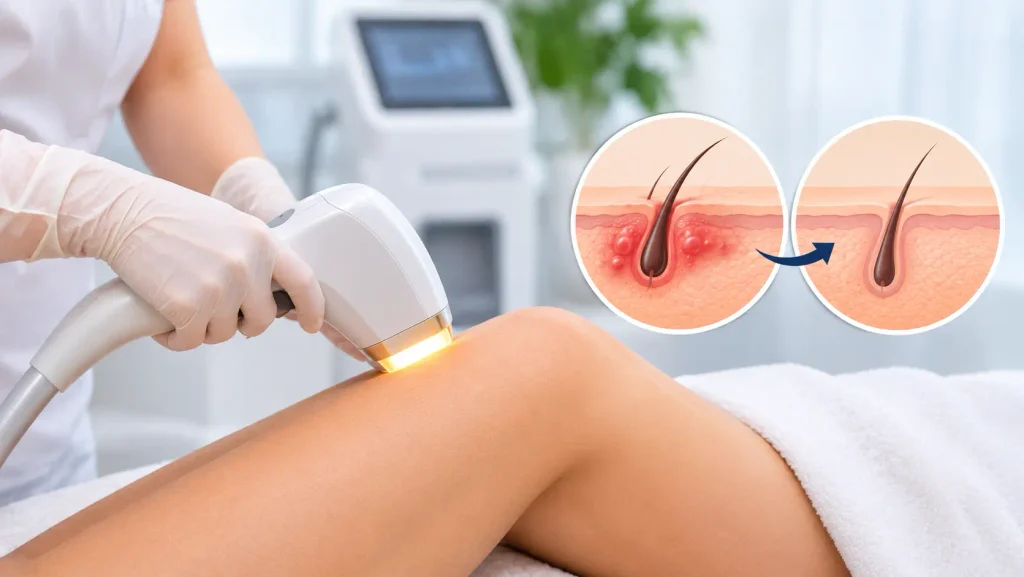
Shaving leaves a sharp, angled hair tip. For people with coarse or curly hair, that tip can curve back into the skin and trigger inflamed bumps. Laser Hair Removal for Razor Bumps addresses this at the source by reducing the follicle’s output over time, so regrowth becomes finer and far less likely to re-enter the skin. For those exploring Laser Hair Removal Treatment in Vancouver, understanding how the treatment works helps set realistic expectations.
Key Takeaways
Razor bumps form when coarse or curly hair re-enters the skin after shaving, triggering inflammation around the follicle.
Laser targets the follicle directly, reducing output so regrowth is finer and less likely to cause bumps.
Multiple sessions are needed as follicles grow in cycles; most patients see improvement within the first few appointments.
The 1064 nm Nd:YAG laser is preferred for darker skin tones, with clinical studies reporting over 50 percent improvement in persistent cases.
Reducing hair density through laser breaks the shaving cycle that perpetuates razor bumps.
How Laser Hair Removal Reduces Razor Bumps
Laser energy is absorbed by pigment inside the hair follicle and converted to heat, damaging the follicle and reducing its capacity to produce new hair. When regrowth occurs, it is finer and softer, with less ability to re-enter the skin. The treatment targets the cause of razor bumps rather than the surface inflammation.
Because hair grows in cycles, not all follicles are active simultaneously. Laser Hair Removal Sessions are spaced several weeks apart to reach each follicle during its growth phase. Most patients notice a reduction in razor bumps after the first few appointments, with continued improvement as more follicles are treated.
Why Coarse and Curly Hair Is Most Prone to Razor Bumps
Coarse, curly hair tends to curve back toward the skin after removal. Surface-level Ingrown Hair Treatment options such as exfoliation and glycolic acid can ease irritation but do not change how the hair grows. Laser hair removal reduces the follicle’s output at the source, targeting the cause rather than the symptom.
The bikini area presents a particular challenge because hair there is naturally coarser and the skin is more sensitive. Laser Hair Removal for the Bikini Area is one of the most requested applications for this reason, delivering a consistent reduction in hair density and the bumps that result from regrowth in a zone where topical approaches often fall short.
Laser Hair Removal and Darker Skin Tones
Certain laser wavelengths are absorbed by skin pigment as well as hair pigment, historically raising concerns for deeper skin tones. The 1064 nm Nd:YAG laser bypasses epidermal melanin more effectively, making it the preferred option for Fitzpatrick skin types IV to VI. Clinical reviews have reported greater than 50 percent improvement in persistent razor bump cases treated with this technology.
Choosing a provider experienced with Laser Hair Removal for Different Skin Types is essential for anyone with a medium to deep skin tone. Incorrect device selection can cause hyperpigmentation, so a thorough skin assessment before treatment is non-negotiable.
Common Treatment Areas and Razor Bump Prevention
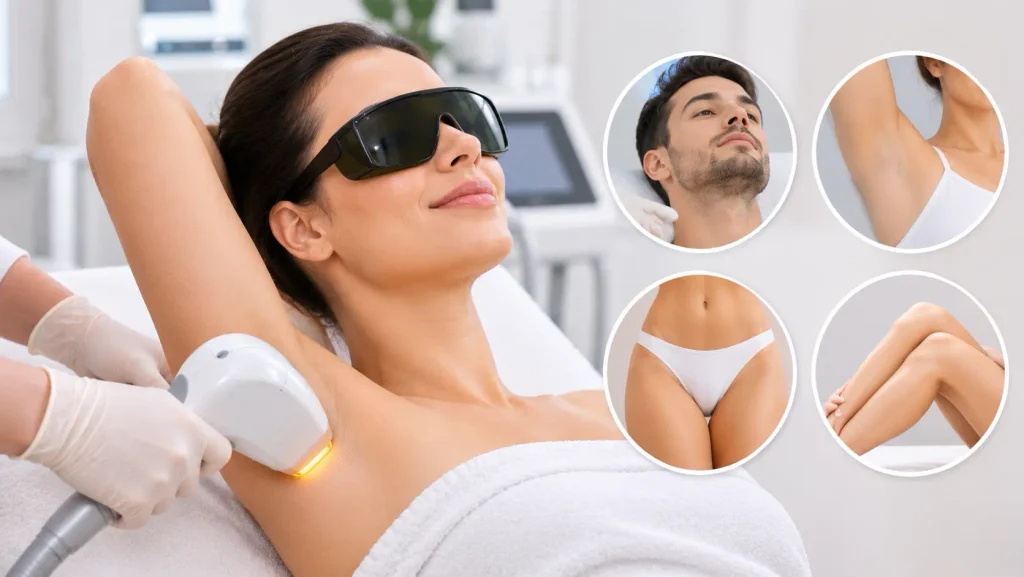
Razor bumps can develop anywhere hair is regularly removed. The most common areas are the face and neck in men, the underarms, the bikini line and the lower legs. Discussing the full range of Laser Hair Removal Treatment Areas at your consultation lets the provider build a plan focused on where your concerns are most significant.
A key Razor Bumps Prevention benefit is that the laser breaks the cycle of shaving, irritation and recurring inflammation. As hair density decreases, the need to shave as often drops, removing the main trigger for new bumps.
What to Expect Before and After Treatment
Laser hair removal works best when active bumps have calmed before a session. Those with Laser Hair Removal for Sensitive Skin concerns should disclose their history at the consultation, including any tendency toward keloid scarring or post-inflammatory hyperpigmentation. After treatment, avoid heat, direct sun and exercise for 24 to 48 hours.
A common question at consultations is about Best Age for Laser Hair Removal. Treatment is generally appropriate for adults whose hair growth has stabilised, typically from the late teens onward. Candidacy depends on skin tone, hair type and health history rather than age alone.
For anyone dealing with persistent razor bumps, laser hair removal offers a clinically supported path that goes beyond surface-level treatment. AE.R Skinlab provides personalized consultations to assess your skin, identify the right laser technology for your tone and hair type, and build a plan around your goals. Book a consultation to take the first step.
Frequently Asked Questions
Can laser hair removal get rid of razor bumps?
Laser Hair Removal for Razor Bumps reduces the problem by targeting follicles that produce the hair causing irritation. It does not remove existing bumps instantly but significantly reduces new ones, with clinical studies reporting greater than 50 percent improvement in persistent cases.
Does laser hair removal prevent ingrown hairs?
Yes. By reducing hair density and producing finer regrowth, laser treatment makes it less likely that hairs curve back into the skin. It consistently reduces the frequency of ingrown hairs, though individual results vary.
How many laser sessions are needed to reduce razor bumps?
Most patients see improvement within four to six sessions. The exact number depends on the treatment area, hair type, skin tone and individual follicle response. Maintenance sessions may be recommended over time.
Which laser is suitable for darker skin tones?
The 1064 nm Nd:YAG laser is preferred for Fitzpatrick skin types IV to VI. Its longer wavelength bypasses epidermal melanin more effectively, reducing the risk of pigmentation changes in deeper skin tones.
What are the possible side effects of laser hair removal?
Common side effects include temporary redness and mild swelling that resolve within a day or two. Blistering or pigment changes are rare and more likely when treatment is applied to unsuitable candidates or with poorly calibrated settings.